Hugh Nibley sums up my view of discussions about Book of Mormon geography: "[The Nephites] journeyed in the wilderness for many days [to get away from Laman and Lemuel]. We don't know how many many is. Book of Mormon geography is a waste of time. I wouldn't touch it with a forty-foot pole. Never have; it's not necessary. Some day we'll get more information, I suppose. Everybody has tried their hand at it. I don't know why; it doesn't make any difference." (Nibley, Teachings of the Book of Mormon Part 1, 2004, Covenant Communications).
I know some, maybe even many LDS Church members, disagree with that sentiment but we do not know where in the Americas the Book of Mormon events took place. We can speculate all we want and say, "Well Joseph Smith [purportedly] said this" or "This narrow neck of land is the Panama isthmus or this particular area in modern Mexico or Guatemala or the Great Lakes region." Whatever; we do not know where the Book of Mormon events took place and speculating about them is a waste of time. Again, I know some disagree but I wanted to offer my opinion on the matter. Maybe we'll learn more in our lifetimes but for now there are much better things upon which to focus, like the basic doctrines of the gospel: faith in Jesus Christ, repentance, baptism by immersion, and the Holy Ghost.
Do I have no intellectual curiosity about matters such as Book of Mormon geography? To the contrary, I find it a fascinating topic; fascinating but a waste of time. We simply do not know and even if we did, it is not important. Knowing just where King Benjamin was exactly when he gave his marvelous farewell address does nothing for our salvation but knowing, believing, and living what he taught does. I would love to know Book of Mormon geography - we have fairly compelling evidence of how and where Lehi and his family went after they left Jerusalem but after that? It's anyone's guess.
Showing posts with label Book of Mormon. Show all posts
Showing posts with label Book of Mormon. Show all posts
24 March 2010


04 October 2009
Selected October 2009 General Conference Quotes and Thoughts - Sunday Afternoon Session

Elder Holland's talk was one of the most powerful testimonies of the Book of Mormon you will likely hear in your life!
Prophecies regarding the last days often reveal calamities - political and economic.
The Savior warned that even the very elect could be deceived in the last days. Think of the heart as the poetic location of our loyalties and values. Heavenly Father knows all of our troubles of the heart and soul. The Book of Mormon begins with a great parable of life - hope vs. fear, salvation vs. destruction, etc. Mists of darkness arose to make the hard way even harder. There was a rod of iron that led the way - it was a manifestation of God's love - it was His word.
The power of Christ [will counter] all troubles in all times, including the end of times. That is the safe harbor God wants for us in public or personal despair. As we are faithful, we can be made strong.
Elder Holland told of the martyrdom of Hyrum and Joseph. Many testify of the truth of the Book of Mormon and of the truthfulness of Joseph's calling as a prophet of God. Joseph and Hyrum were willing to die rather than deny the divine origin of the Book of Mormon. The Book of Mormon has been denied and attacked since its publication and no attack has ever held.
"No wicked man could write a book like this [the Book of Mormon] and no good man would write it, unless it were truth and he had been commanded of God."
The Book of Mormon is a stone of stumbling and rock of offense to the unbeliever.
"My testimony is as binding and unequivocal as [Joseph's]...I give my witness to the world [that the Book of Mormon is true...I lie not."
God always provides safety for the soul and with the Book of Mormon He has again done that.

We have the freedom to choose our course in this life...but we will be accountable for our choices.
We are stewards over our minds, bodies...
Stewardship for ourselves and family.
"We live in a time when virtue and chastity are not safeguarded." The wellsprings of life are to be kept pure. This is one of the reasons why virtue and chastity are so important in our Father's Plan. When our thoughts or actions are impure, we violate His standard.
Those who rationalize, remind us of little children who cover their eyes convinced that they can't see us and we can't see them.
All can repent and return to a state of cleanliness. "Behold, he who has repented of his sins, the same is repented and I remember them no more." We have a duty to secure the physical and spiritual well-being of our children. Having religious observance in our home is as important as having food, shelter, and clothing.
Stewardship for the poor and needy.
We are accountable as stewards over earthly blessings.
Story of 80 year old Sarah who was one of first to give service or donations. He also spoke of the Church's humanitarian efforts, including fast offerings.
We should be diligent. Because of contributions, the church can respond quickly without fanfare to needs/disasters around the world. In all our stewardship actions, we try to follow the Savior.

We all possess the God-given gift of moral agency. For positive outcomes, moral agency must be coupled with moral discipline.
The root of the word discipline is shared with the word "disciple." Our moral discipline is rooted in loyalty and devotion to the Father and Son. It is the gospel of Jesus Christ that provides the foundation of moral discipline.
The world sees moral as relative. This leads to lack of internal control, which requires external coercion by governments. We rely on external laws to regulate behavior, which shows how uncivilized we have become.
We need an internal moral compass within each individual that can deal with the root causes of personal and societal ills. Moral discipline is learned at home. We can't dictate what others will do [but we can what we do]. There must be constant teaching, mostly by example [of the gospel]. The intelligent use of agency requires knowledge of truth to see things how they are.
Satan and his followers are not promoting objectivity. We should not have to learn by sad experience that wickedness never was happiness. Early discipline [of children] can bring an abrupt end to crime [or prevent it outright].
"While therapy can support a person's will, it cannot substitute for it."

We live in a time when many in the world have slipped from the moorings of safety. Many are routinely disregarding the laws of God.
May we have no more disposition to do evil, but to do good continually. "I love you my brothers and sisters. I pray for you. I ask that you would remember me and all the general authorities [in your prayers]." Jesus guides and directs His church here upon the earth.
20 September 2009
Testimony
To testify is to declare a belief about, of, or in something. It is to declare a fact or a truth about something. It is to witness your knowledge of the veracity of something. The word testimony is a noun so someone has a testimony or can declare their testimony by testifying. The word testimony comes from the Latin word testis meaning witness (not to be confused with the male body part!). It is also related to the Latin words for three and stand, implying that the testis, or witness, stands as another (third) witness. We are taught in the Old Testament - testament is the same word as testimony - as well as the New Testament and Doctrine & Covenants that there need to be multiple witnesses to establish the truth of an accusation or declaration; this includes God's word, which shall be established by multiple witnesses (two or three; see Deut. 19:15; Matt. 18:16; D&C 6:28). It is in the bearing testimony of multiple witnesses that truth is established. Even the Godhead, though one in witness and purpose and glory, constitute multiple witnesses. When Jesus Christ was baptized, His Father bore witness to John the Baptist saying, "This is my beloved Son." The Holy Ghost also descended like a dove to bear witness to John of the divinity of Jesus Christ. God's pattern for testifying of His truths is well-established.
When Alma and Amulek started preaching to the people in the land of Ammonihah, the people were astonished that two people bore witness unto them: "And now, when Amulek had spoken these words the people began to be astonished, seeing there was more than one witness who testified of the things whereof they were accused, and also of the things which were to come, according to the spirit of prophecy which was in them" (Alma 10:12). This is one reason LDS missionaries go out two by two - there are multiple people to bear witness, to share their testimony of the truths of the gospel.
In the October 2001 General Conference Elder Richard G. Scott gave this powerful teaching about testimony: "A strong testimony is the sustaining power of a successful life. It is centered in an understanding of the divine attributes of God our Father, Jesus Christ, and the Holy Ghost. It is secured by a willing reliance upon Them. A powerful testimony is grounded in the personal assurance that the Holy Ghost can guide and inspire our daily acts for good. A testimony is fortified by spiritual impressions that confirm the validity of a teaching, of a righteous act, or of a warning of pending danger. Often such guidance is accompanied by powerful emotions that make it difficult to speak and bring tears to the eyes. But a testimony is not emotion. It is the very essence of character woven from threads born of countless correct decisions" (Ensign, Nov. 2001, Scott; emphasis added).
Let me repeat: "[A testimony] is the very essence of character woven from threads born of countless correct decisions." A testimony is based on the goodness of our lives, of our characters, and our actions. Our testimonies are strengthened as we live in accordance to the principles and ordinances of the gospel. In fact, that is the surest way to gain a testimony! Live the gospel principles for which you strive to gain a testimony. If you want to have a testimony of tithing, pay it! If you want to have a testimony of Jesus Christ, live His teachings. If you want to have a testimony of anything else, do it. That is one reason we are taught in Alma 32 to "experiment upon the word." As we test what God has told us, we can know of its truth.
I want to share an experience when my testimony of the prophet Joseph Smith was strengthened. I'll quote from my missionary journal: "Tonight we taught Sarah [name changed] the 1st discussion at the stake center. She bought us pizza! What an amazing discussion. Elders VanBebber, Malie, and I taught it. Sarah is amazing. (Today Elder Malie and I reviewed the 1st [discussion] for companionship study and how we can apply it to Sarah. While doing that I decided to use the Joseph Smith pamphlet and read the Joseph Smith history in the discussion, as we are supposed to [do] but do not always do). [Sarah] used to go to church when she was 8 or so (LDS Church) with some friends. She even wanted to be baptized but told [her mom] and [her mom] said she couldn't go to that family's house any more. What a change [Sarah's mom] has gone through [we taught and baptized her previous to this experience]! I got to teach the Joseph Smith principle. Amazing! While I paused after the First Vision story, the Spirit hit me hard and I even started to cry. That is the first time that has happened to me - getting emotional like that in a discussion. As I testified of Joseph Smith I thought, 'Now I can really, honestly, [and fully] say that I know Joseph Smith is a prophet.' I have always known but now I KNOW! That feeling I received, I shall never forget nor deny."
I have not forgotten that feeling, even 8+ years later. That was one of the singular moments in my life. As I wrote back as a missionary, I have always known Joseph Smith was a prophet. That's not something I have ever doubted. My testimony of his calling as a prophet was based on years of going to church, reading the scriptures, praying, and learning about him. I saw and partook of the fruits the Lord restored through him to the earth. However, before that time I had not had a powerful singular experience like the one I had that evening. That does not mean I did not have a testimony before - I did - but it was strengthened considerably by that experience. What I did not write was how I had been reading my scriptures and praying with a sincere earnestness that I would receive a witness of the gospel. I had not just received that witness out of the blue, although that can happen; testimonies are most often gained through mighty prayer and righteous living. Sometimes - or most times - we must wrestle in prayer as we seek a witness of the truths of the gospel.
For any who want to receive a witness of the truthfulness of the gospel Elder Scott offers His apostolic counsel: "Try reading the Book of Mormon because you want to, not because you have to. Discover for yourself that it is true. As you read each page ask, 'Could any man have written this book or did it come as Joseph Smith testified?' Apply the teachings you learn. They will fortify you against the evil of Satan. Follow Moroni’s counsel. Sincerely ask God the Father, in the name of Jesus Christ, with real intent, if the teachings of the Book of Mormon are true (see Moro. 10:3–5). Ask with a desire to receive a confirmation personally, nothing doubting. There has to be an explanation of that book you can hold in your hand. I know that you can receive a spiritual confirmation that it is true. You will then know that Jesus Christ lives, that Joseph Smith was and is a prophet, and that The Church of Jesus Christ of Latter-day Saints is the Lord’s Church (see introduction to the Book of Mormon, especially the last paragraph). You will confirm that the Savior guides His Church through a living prophet. These truths will become a foundation for your productive life." (Elder Scott, Ensign, November 2003).
I add my testimony to his that all can receive a witness of the truthfulness of the gospel. We can all know that Joseph Smith was a prophet, that the Book of Mormon is God's word. We can know that Jesus is Divine, the Only Begotten Son of God in the flesh, our Savior and Redeemer. We can know that God has a plan for each of us and that plan is to return to live with Him again and to someday see Him as He really is. I know these things and testify of them in the name of Jesus Christ.
When Alma and Amulek started preaching to the people in the land of Ammonihah, the people were astonished that two people bore witness unto them: "And now, when Amulek had spoken these words the people began to be astonished, seeing there was more than one witness who testified of the things whereof they were accused, and also of the things which were to come, according to the spirit of prophecy which was in them" (Alma 10:12). This is one reason LDS missionaries go out two by two - there are multiple people to bear witness, to share their testimony of the truths of the gospel.
In the October 2001 General Conference Elder Richard G. Scott gave this powerful teaching about testimony: "A strong testimony is the sustaining power of a successful life. It is centered in an understanding of the divine attributes of God our Father, Jesus Christ, and the Holy Ghost. It is secured by a willing reliance upon Them. A powerful testimony is grounded in the personal assurance that the Holy Ghost can guide and inspire our daily acts for good. A testimony is fortified by spiritual impressions that confirm the validity of a teaching, of a righteous act, or of a warning of pending danger. Often such guidance is accompanied by powerful emotions that make it difficult to speak and bring tears to the eyes. But a testimony is not emotion. It is the very essence of character woven from threads born of countless correct decisions" (Ensign, Nov. 2001, Scott; emphasis added).
Let me repeat: "[A testimony] is the very essence of character woven from threads born of countless correct decisions." A testimony is based on the goodness of our lives, of our characters, and our actions. Our testimonies are strengthened as we live in accordance to the principles and ordinances of the gospel. In fact, that is the surest way to gain a testimony! Live the gospel principles for which you strive to gain a testimony. If you want to have a testimony of tithing, pay it! If you want to have a testimony of Jesus Christ, live His teachings. If you want to have a testimony of anything else, do it. That is one reason we are taught in Alma 32 to "experiment upon the word." As we test what God has told us, we can know of its truth.
I want to share an experience when my testimony of the prophet Joseph Smith was strengthened. I'll quote from my missionary journal: "Tonight we taught Sarah [name changed] the 1st discussion at the stake center. She bought us pizza! What an amazing discussion. Elders VanBebber, Malie, and I taught it. Sarah is amazing. (Today Elder Malie and I reviewed the 1st [discussion] for companionship study and how we can apply it to Sarah. While doing that I decided to use the Joseph Smith pamphlet and read the Joseph Smith history in the discussion, as we are supposed to [do] but do not always do). [Sarah] used to go to church when she was 8 or so (LDS Church) with some friends. She even wanted to be baptized but told [her mom] and [her mom] said she couldn't go to that family's house any more. What a change [Sarah's mom] has gone through [we taught and baptized her previous to this experience]! I got to teach the Joseph Smith principle. Amazing! While I paused after the First Vision story, the Spirit hit me hard and I even started to cry. That is the first time that has happened to me - getting emotional like that in a discussion. As I testified of Joseph Smith I thought, 'Now I can really, honestly, [and fully] say that I know Joseph Smith is a prophet.' I have always known but now I KNOW! That feeling I received, I shall never forget nor deny."
I have not forgotten that feeling, even 8+ years later. That was one of the singular moments in my life. As I wrote back as a missionary, I have always known Joseph Smith was a prophet. That's not something I have ever doubted. My testimony of his calling as a prophet was based on years of going to church, reading the scriptures, praying, and learning about him. I saw and partook of the fruits the Lord restored through him to the earth. However, before that time I had not had a powerful singular experience like the one I had that evening. That does not mean I did not have a testimony before - I did - but it was strengthened considerably by that experience. What I did not write was how I had been reading my scriptures and praying with a sincere earnestness that I would receive a witness of the gospel. I had not just received that witness out of the blue, although that can happen; testimonies are most often gained through mighty prayer and righteous living. Sometimes - or most times - we must wrestle in prayer as we seek a witness of the truths of the gospel.
For any who want to receive a witness of the truthfulness of the gospel Elder Scott offers His apostolic counsel: "Try reading the Book of Mormon because you want to, not because you have to. Discover for yourself that it is true. As you read each page ask, 'Could any man have written this book or did it come as Joseph Smith testified?' Apply the teachings you learn. They will fortify you against the evil of Satan. Follow Moroni’s counsel. Sincerely ask God the Father, in the name of Jesus Christ, with real intent, if the teachings of the Book of Mormon are true (see Moro. 10:3–5). Ask with a desire to receive a confirmation personally, nothing doubting. There has to be an explanation of that book you can hold in your hand. I know that you can receive a spiritual confirmation that it is true. You will then know that Jesus Christ lives, that Joseph Smith was and is a prophet, and that The Church of Jesus Christ of Latter-day Saints is the Lord’s Church (see introduction to the Book of Mormon, especially the last paragraph). You will confirm that the Savior guides His Church through a living prophet. These truths will become a foundation for your productive life." (Elder Scott, Ensign, November 2003).
I add my testimony to his that all can receive a witness of the truthfulness of the gospel. We can all know that Joseph Smith was a prophet, that the Book of Mormon is God's word. We can know that Jesus is Divine, the Only Begotten Son of God in the flesh, our Savior and Redeemer. We can know that God has a plan for each of us and that plan is to return to live with Him again and to someday see Him as He really is. I know these things and testify of them in the name of Jesus Christ.
12 June 2009
The Witness of the Book of Mormon, Part 5
 I'll address other ways the Book of Mormon can help clarify the Bible. For instance, there are many differences in beliefs about the resurrection. Some people believe we will remain as spirit bodies. Others believe we will have physical bodies. Some believe that all will be resurrected while others believe only some will be resurrected. The Book of Mormon teaches that we will all be resurrected - all who ever lived on the earth - and that it is a physical resurrection (see Alma 40; Mosiah 15). Having these two witnesses (we also have additional teachings by modern prophets - see D&C 76, for example) clarifies doctrine. We no longer have to rely solely on the Bible, even as wonderful as it is. We can understand the doctrines with more clarity and purity. However, it is the living prophets who provide true clarity and additional light and knowledge. [image by AllAboutMormons.com].
Without living prophets and even with the Book of Mormon, the doctrines of the gospel would quickly corrupt (we certainly have a broad range of opinions about many doctrines or practices within the Church, even among the General Authorities), just as they did following the Savior's resurrection and the deaths of His original apostles. It's not the books that the most important - what's most important is the gift of the Holy Ghost - the ability to receive personal witnesses and revelation concerning the truths of the gospel - and the Priesthood power and authority. The priesthood allows for the organization of the church to function and exist. The priesthood keys as held by the prophet (and given to others through delegation and inspired callings) allow the ordinances of the gospel to be performed here on earth and be notarized in heaven.
As members of The Church of Jesus Christ of Latter-day Saints, we claim that the Bible is the word of God. We do not, however, accept it as a closed canon. We view scripture as open, expanding, and contemporary through ongoing revelation. We believe this view to be Biblical. Just as what Amos wrote added to what Moses had written (to refer back to Elder Holland's quote at the beginning of this essay) and what Paul wrote added to the words of the Redeemer, we claim that modern prophets give new scripture. Instead of simply retranslating the Bible into more modern English, we have prophets who receive new revelation. We certainly can apply the doctrines and teachings of the Bible to our day and adapt them to our understanding and lives but we are not limited any more to the Bible. Does God love His children today any less than those who lived during Biblical times? No! He speaks to prophets today just as He did then. He caused the Book of Mormon to speak from the dust (see Isaiah 29:4; 2 Nephi 26:16; 2 Ne. 33:13). He restored His Church through the prophet Joseph Smith, a restoration that brought about the blessings and promises of the fullness of the gospel, including the blessings of continuing revelation to prophets who speak with authority from God. God speaks to us today - individually (just as He has done throughout the ages) and through prophets. Not only does the Book of Mormon stand as Another Witness of Jesus Christ, but also the testimonies of the prophets verify the truth of the Bible and the divinity of our Lord Jesus Christ, the Atoner.
Link to part 4 of this essay.
08 June 2009
The Witness of the Book of Mormon, Part 4
"And now, my beloved brethren, and also Jew, and all ye ends of the earth, hearken unto these words and believe in Christ; and if ye believe not in these words believe in Christ. And if ye shall believe in Christ ye will believe in these words, for they are the words of Christ, and he hath given them unto me; and they teach all men that they should do good. And if they are not the words of Christ, judge ye—for Christ will show unto you, with power and great glory, that they are his words, at the last day; and you and I shall stand face to face before his bar; and ye shall know that I have been commanded of him to write these things, notwithstanding my weakness.As we accept the truths of the Book of Mormon we will better understand the doctrines found in the Bible. In addition to verifying the truth of the Bible, the Book of Mormon can clarify its teachings. Over the years of translations and copies of copies, changes were introduced into the Bible - on purpose or inadvertently. Most were inadvertent and could have included simply choosing to translate one word in a particular manner. Even aside from changes, people interpret the Bible in many different ways. Interpretations might be similar but many are significantly different.
And I pray the Father in the name of Christ that many of us, if not all, may be saved in his kingdom at that great and last day. And now, my beloved brethren, all those who are of the house of Israel, and all ye ends of the earth, I speak unto you as the voice of one crying from the dust: Farewell until that great day shall come. And you that will not partake of the goodness of God, and respect the words of the Jews [the Bible, mainly the Old Testament], and also my words [the Book of Mormon], and the words which shall proceed forth out of the mouth of the Lamb of God [contained in the Bible, Book of Mormon, Doctrine & Covenants, and spoken by modern prophets], behold, I bid you an everlasting farewell, for these words shall condemn you at the last day" (2 Nephi 33:10-14).
Some people take the Bible as a completely figurative and spiritual book while others take everything strictly literally. Joseph Smith explained it well: "The Presbyterians were most decided against the Baptists and Methodists, and used all the powers of both reason and sophistry to prove their errors, or, at least, to make the people think they were in error. On the other hand, the Baptists and Methodists in their turn were equally zealous in endeavoring to establish their own tenets and disprove all others....the teachers of religion of the different sects understood the same passages of scripture so differently as to destroy all confidence in settling the question by an appeal to the Bible" (Joseph Smith-History 1:9,12).
Joseph did not state that the Bible was false or untrue or wrong; he just said that people argued and debated over what particular passages of scripture meant. Some of the arguments were and are very bitter. If he asked the Baptists, they said one thing. If he asked the Methodists, they said another. These debates continue today; look at the myriad Christian churches throughout the world. There are as many different and distinct churches as verses in the Bible (to be a bit hyperbolic)! So who has the truth? Do they all have the truth? I believe all have truth but do all have all the truth (or at least all the truths necessary for salvation)? No. How can we know the truth? Who is the source of truth? Who inspired prophets in Biblical times and gave them revelations that they wrote down? The Lord did.
Because God is the source of truth, Joseph's solution was to do as the Bible suggested in James 1:5 (verse 6 is also linked to), "If any of you lack wisdom, let him ask of God, that giveth to all men liberally, and upbraideth not; and it shall be given him." Joseph knew he had to ask the Lord in prayer. The Lord is the source of Truth so Joseph went to that Source. In response to Joseph's prayer at the age of 14, Heavenly Father and Jesus Christ appeared to Joseph. They called him by name and called him to be the prophet, a role he would grow into over the years.
Link to part 3 of this essay.
05 June 2009
The Witness of the Book of Mormon, Part 3
As Latter-day Saints we believe that the Book of Mormon is a collection of the writings and teachings of prophets who lived in the Americas over a span of a few thousand years. The Savior taught "And other sheep I have, which are not of this fold: them also I must bring, and they shall hear my voice; and there shall be one fold, and one shepherd" (John 10:16). When the Savior visited some of the people in the Americas after His resurrection He said, "And verily I say unto you, that ye are they of whom I said: Other sheep I have which are not of this fold; them also I must bring, and they shall hear my voice; and there shall be one fold, and one shepherd" (3 Ne. 15:21). However, He had even more sheep that needed to hear His voice: "And verily, verily, I say unto you that I have other sheep, which are not of this land, neither of the land of Jerusalem, neither in any parts of that land round about whither I have been to minister" (3 Ne. 16:1). We believe that God's words do not cease. He speaks to us today through His prophets just as He did in Biblical times.
Brigham Young said something that I think is important here: "Learning a, b, c, d, does not hinder me from learning e, f, g" (Discourses of Brigham Young, p. 245). In other words (and to adapt his quote to this essay), just because someone happens to know a and b does not mean they cannot also know c, d, and e. Believing in the Bible does not preclude believing in the Book of Mormon. Or, having the Book of Mormon does not lessen the importance of the Bible. In reality it increases the importance of the Bible because it stands as another witness to the veracity of the Bible. We have that additional testimony that the Bible is true! "In the mouth of two or three witnesses shall every word be established" (2 Cor. 13:1; see also Deut. 17:6, Matt. 18:16, D&C 6:28). God establishes the truth of His words through many witnesses. However, many believe that the Bible is enough. The Lord cautioned those who state that the Bible is all they need.
Brigham Young said something that I think is important here: "Learning a, b, c, d, does not hinder me from learning e, f, g" (Discourses of Brigham Young, p. 245). In other words (and to adapt his quote to this essay), just because someone happens to know a and b does not mean they cannot also know c, d, and e. Believing in the Bible does not preclude believing in the Book of Mormon. Or, having the Book of Mormon does not lessen the importance of the Bible. In reality it increases the importance of the Bible because it stands as another witness to the veracity of the Bible. We have that additional testimony that the Bible is true! "In the mouth of two or three witnesses shall every word be established" (2 Cor. 13:1; see also Deut. 17:6, Matt. 18:16, D&C 6:28). God establishes the truth of His words through many witnesses. However, many believe that the Bible is enough. The Lord cautioned those who state that the Bible is all they need.
"And because my words shall hiss forth—many of the Gentiles shall say: A Bible! A Bible! We have got a Bible, and there cannot be any more Bible.... Thou fool, that shall say: A Bible, we have got a Bible, and we need no more Bible. Have ye obtained a Bible save it were by the Jews? Know ye not that there are more nations than one?...Wherefore murmur ye, because that ye shall receive more of my word? Know ye not that the testimony of two nations is a witness unto you that I am God, that I remember one nation like unto another?Those are strong words but sometimes the truth is hard to bear. However, they are also very loving words; they show God's care and concern for all His children. He speaks to many nations so they may know His words of great joy and love. He wants all His children to hear His words. I think all would be glad to know that God speaks to us today (except for those who find it more convenient to believe God is dead, God doesn't exist, or God at least only spoke to a bunch of old dead guys)! His words and works do not cease. His work and glory is to provide eternal life to as many as will accept it (see Moses 1:39). I testify that the Book of Mormon contains the words of Christ. It builds, strengthens, and fortifies the Bible.
Wherefore, I speak the same words unto one nation like unto another. And when the two nations shall run together the testimony of the two nations shall run together also. And I do this that I may prove unto many that I am the same yesterday, today, and forever; and that I speak forth my words according to mine own pleasure. And because that I have spoken one word ye need not suppose that I cannot speak another; for my work is not yet finished; neither shall it be until the end of man, neither from that time henceforth and forever. Wherefore, because that ye have a Bible ye need not suppose that it contains all my words; neither need ye suppose that I have not caused more to be written....
For behold, I shall speak unto the Jews and they shall write it; and I shall also speak unto the Nephites and they shall write it; and I shall also speak unto the other tribes of the house of Israel, which I have led away, and they shall write it; and I shall also speak unto all nations of the earth and they shall write it. And it shall come to pass that the Jews shall have the words of the Nephites, and the Nephites shall have the words of the Jews; and the Nephites and the Jews shall have the words of the lost tribes of Israel; and the lost tribes of Israel shall have the words of the Nephites and the Jews" (2 Nephi 29:3,6-13; emphasis added).
01 June 2009
The Witness of the Book of Mormon, Part 2
 What is key to understand is that the Bible is a collection of individual books. These books were selected over the years, eventually comprising what we now know as the Bible. The two main divisions of the Bible - the Old and New Testaments - can be viewed as old and new covenants with the covenant people of the Lord (and with the broader world). This is not strictly true because the "new covenant" was largely the original "oldest covenant" (although there were some differences - animal sacrifice being one of them. Adam offered up sacrifices unto the Lord); when Moses was called to restore the covenant that had been lost during the years of the captivity of the Israelites in Egypt, he found that the people were slow to listen. They had grown stony hearts in Egypt, hearts that yearned too much for the deaf but permissive idols of the Egyptians. [Image source].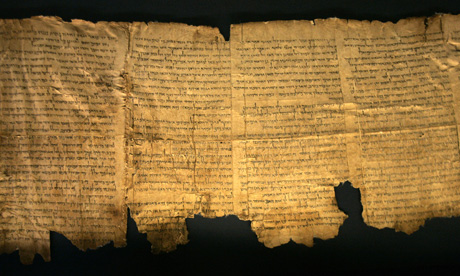
The Lord, understanding the hardness of His people's hearts, restored unto them through Moses, not the covenants originally made with Adam but a new covenant of strict ordinances and laws - a covenant that would command them in many things but ultimately prepare them to receive the higher and original covenant. It was not until the coming of the Savior upon the earth that the new covenant was made (or, more closely, re-introduced). However, this new covenant was quickly lost from the earth. The priesthood, which allowed the ordinances of the covenant to be performed with true authority, was lost. The people apostatized. The covenant would not be known in its fullness until the Lord started revealing it unto His prophet Joseph Smith in 1820. That restoration took a number of years before it was complete. Our living prophet continues to receive more light from the Lord. We live in a day when we have the fullness of the gospel, a thing that never occurred before on the earth, at least not in the general and widespread manner it is today.
As Latter-day Saints we have the Bible. We revere it and love it. We follow its teachings and place it first in our canon. Elder Ballard spoke these words about the Bible at General Conference in April 2007,
"It is a miracle that the Bible literally contains within its pages the converting, healing Spirit of Christ, which has turned men's hearts for centuries, leading them to pray, to choose right paths, and to search to find their Savior. The Holy Bible is well named. It is holy because it teaches truth, holy because it warms us with its spirit, holy because it teaches us to know God and understand His dealings with men, and holy because it testifies throughout its pages of the Lord Jesus Christ. Abraham Lincoln said of the Bible: 'This Great Book . . . is the best gift God has given to man. All the good the Saviour gave to the world was communicated through this book. But for it we could not know right from wrong' (Speeches and Writings, 1859–1865 [1989], 628)."We do not, however, view the Bible as the breadth, width, and depth of God's words to His children. The Bible is a collection of the words of prophets. That is what makes it special! It is a record of the revelations given to prophets over thousands of years. Surely prophets received many other revelations that are not recorded in the books of the Bible! We know that the Savior taught many things are not contained within the Bible: "And many other signs truly did Jesus in the presence of his disciples, which are not written in this book" (John 20:30); "And there are also many other things which Jesus did, the which, if they should be written every one, I suppose that even the world itself could not contain the books that should be written. Amen" (John 21:25). While John was using hyperbole, the underlying meaning is true - there are many things that the Savior said and did that are neither contained in John's writings nor the writings of the other prophets.
There are many things Jesus said and did that we do not have in the Bible. This is true for all the prophets throughout history. Scrolls and tablets and other things to write on were relatively expensive and difficult to manage. Scrolls decomposed quickly, parchment was very expensive, and tablets or plates were awkward. In addition, not every one could write. Many prophets lived in circumstances where they traveled a lot or they had other things to deal with - wars and families and employment. The words and prophecies that were recorded were selected because they were the most important or they were selected because they survived time, or both. It is a miracle we have the Bible as it is!
Link to part 1 of this essay.
30 May 2009
The Witness of the Book of Mormon, Part 1
There are three recent General Conference talks that relate to this essay. All have to do with the Bible and Latter-day Saint beliefs about scripture. This is an important doctrine because unlike most other Christian religions, The Church of Jesus Christ of Latter-day Saints believes in modern and ongoing revelation to prophets of the Lord Jesus Christ.
In April 2008 Elder Holland gave a talk, "My Words...Never Cease" about ongoing revelation. In it he also gave a brief history of the Bible. In October 2007 Elder Nelson spoke on Scriptural Witnesses. In April 2007 Elder Ballard spoke about The Miracle of the Holy Bible.
I'll start with a quote from Elder Holland.
In April 2008 Elder Holland gave a talk, "My Words...Never Cease" about ongoing revelation. In it he also gave a brief history of the Bible. In October 2007 Elder Nelson spoke on Scriptural Witnesses. In April 2007 Elder Ballard spoke about The Miracle of the Holy Bible.
I'll start with a quote from Elder Holland.
For centuries after John produced his writing [Revelation], the individual books of the New Testament were in circulation singly or perhaps in combinations with a few other texts but almost never as a complete collection. Of the entire corpus of 5,366 known Greek New Testament manuscripts, only 35 contain the whole New Testament as we now know it, and 34 of those were compiled after A.D. 1000.2The Bible did not generally exist in the form it has today until over a thousand years after the Savior's life (although there are very rare copies of the Bible from the 4th century that are similar to what we have today; the Codex Sinaiticus is one example). "The Hebrew Bible-the Old Testament-as Jesus knew it, consisted of from twelve to twenty such scrolls of different sizes. They were never united into what we could call one 'book' until the invention of printing made that possible, in the fifteenth century" (Edgar Goodspeed, How Came the Bible?, p.10 as cited by Robert Millet, Selected Writings of Robert L. Millet, p.5). Committees of scholars and Church leaders decided on what they believed to be the most authoritative and authentic books to include in the Bible. However, the books of the New Testament that are accepted into the modern canon were generally denoted as canonical by about 400 AD (Millet, Selected Writings, p.9).
The fact of the matter is that virtually every prophet of the Old and New Testament has added scripture to that received by his predecessors. If the Old Testament words of Moses were sufficient, as some could have mistakenly thought them to be,3 then why, for example, the subsequent prophecies of Isaiah or of Jeremiah, who follows him? To say nothing of Ezekiel and Daniel, of Joel, Amos, and all the rest. If one revelation to one prophet in one moment of time is sufficient for all time, what justifies these many others? What justifies them was made clear by Jehovah Himself when He said to Moses, “My works are without end, and . . . my words . . . never cease.”4
04 November 2008
Alma and Amulek as Types of Christ, Part 5
After the fall of the prison many came running to see what caused the commotion. When they saw Alma and Amulek walking out unscathed and filled with the power of God they "fled from the presence of Alma and Amulek even as a goat fleeth with her young from two lions" (Alma 14:29). The righteous of the Lord who are of the House of Israel "shall be among the Gentiles, yea, in the midst of them as a lion among the beasts of the forest" (3 Ne. 21:12; see also Mormon 5:24 and 3 Ne. 20:16). Christ is compared to a lion in the scriptures and was born into a house of lions (see Gen. 49:9). Indeed, He is "the Lion of the tribe of Juda, the root of David" (Rev. 5:5). Those who fled from Alma and Amulek fled as goats. Goats are often used in the scriptures as an analogy for the wicked: "And before him [the Son of Man] shall be gathered all nations: and he shall separate them one from another, as a shepherd divideth his sheep from the goats: And he shall set the sheep on his right hand, but the goats on the left.... Then shall he say...unto them on the left hand, Depart from me, ye cursed, into everlasting fire, prepared for the devil and his angels" (Matt. 25:32-33,41). The Good Shepherd calls His sheep and they follow Him. The goats, those who will not hear His voice and follow Him, flee from before His presence just as they did from before Alma and Amulek.
As we study the scriptures we can learn many things and see many parallels with the life of the Savior. We may even see some parallels in our own lives.
As we study the scriptures we can learn many things and see many parallels with the life of the Savior. We may even see some parallels in our own lives.
02 November 2008
Alma and Amulek as Types of Christ, Part 4
After many days Alma and Amulek were once again visited in prison by the chief judge as well as teachers and lawyers. The chief judge hit them again and taunted, "If ye have the power of God deliver yourselves from these bands, and then we will believe that the Lord will destroy this people according to your words" (Alma 14:24). Throughout his crucifixion the Savior received similar taunts (see Luke 23:35; Mark 15:31-32; Matt. 27:42). After all the people visiting Alma and Amulek in prison had hit them and taunted them, Alma cried forth saying, "How long shall we suffer these great afflictions, O Lord? O Lord, give us strength according to our faith which is in Christ, even unto deliverance" (Alma 14:26). In His infinite agony, the Savior cried similar words on the cross, "Eloi, Eloi, lama sabachthani? which is, being interpreted, My God, my God, why hast thou forsaken me? (Mark 15:34; see also Matt. 27:46). After this cry, Alma and Amulek "broke the cords with which they were bound" (Alma 14:26). The Savior broke the cords of death, "And the death of Christ shall loose the bands of this temporal death, that all shall be raised from this temporal death" (Alma 11:42).
When Alma and Amulek broke their bonds, those who came to taunt and torment were afraid and started to flee (see Alma 14:26-27). Some (although they were not wicked), when seeing the empty tomb and hearing the angels proclaim Christ's resurrection, had the same feeling of fear: "And they went out quickly, and fled from the sepulchre; for they trembled and were amazed...for they were afraid" (Mark 16:8). Those who fled from Alma and Amulek were so afraid that they "fell to the earth, and did not obtain the outer door of the prison" (Alma 14:27). Just as these wicked people did not make it out of the prison, the wicked who reject Christ remain in spirit prison. The prison then fell down around Alma and Amulek, "The earth shook mightily, and the walls of the prison were rent in twain"; those who were in the prison taunting Alma and Amulek "were slain by the fall [of the prison]" (Alma 14:27). At Christ's death there were earthquakes in the Old World as well as the New: "And, behold, the veil of the temple was rent in twain from the top to the bottom; and the earth did quake, and the rocks rent" (Matt. 27:51; see also 3 Ne. 8). Those who reject the Lord suffer spiritual death just as those at Alma and Amulek's prison suffered physical death.
Alma and Amulek "came forth out of the prison and they were not hurt; for the Lord had granted unto them power, according to their faith which was in Christ...[for] they were loosed from their bands; and the prison had fallen to the earth" (Alma 14:28). Christ came forth from the prison of Death through the power of God, "And God hath both raised up the Lord, and will also raise up us by his own power" (1 Cor. 6:14); "Therefore doth my Father love me, because I lay down my life, that I might take it again. No man taketh it from me, but I lay it down of myself. I have power to lay it down, and I have power to take it again. This commandment have I received of my Father" (John 10:17-18). "And he hath power given unto him from the Father to redeem them from their sins [and death]" (Hel. 5:11). Christ opened the prison doors for all that we will have power over death and be resurrected. He also opened the prison doors for others to be saved from spiritual death and hell through faith in His name.
When Alma and Amulek broke their bonds, those who came to taunt and torment were afraid and started to flee (see Alma 14:26-27). Some (although they were not wicked), when seeing the empty tomb and hearing the angels proclaim Christ's resurrection, had the same feeling of fear: "And they went out quickly, and fled from the sepulchre; for they trembled and were amazed...for they were afraid" (Mark 16:8). Those who fled from Alma and Amulek were so afraid that they "fell to the earth, and did not obtain the outer door of the prison" (Alma 14:27). Just as these wicked people did not make it out of the prison, the wicked who reject Christ remain in spirit prison. The prison then fell down around Alma and Amulek, "The earth shook mightily, and the walls of the prison were rent in twain"; those who were in the prison taunting Alma and Amulek "were slain by the fall [of the prison]" (Alma 14:27). At Christ's death there were earthquakes in the Old World as well as the New: "And, behold, the veil of the temple was rent in twain from the top to the bottom; and the earth did quake, and the rocks rent" (Matt. 27:51; see also 3 Ne. 8). Those who reject the Lord suffer spiritual death just as those at Alma and Amulek's prison suffered physical death.
Alma and Amulek "came forth out of the prison and they were not hurt; for the Lord had granted unto them power, according to their faith which was in Christ...[for] they were loosed from their bands; and the prison had fallen to the earth" (Alma 14:28). Christ came forth from the prison of Death through the power of God, "And God hath both raised up the Lord, and will also raise up us by his own power" (1 Cor. 6:14); "Therefore doth my Father love me, because I lay down my life, that I might take it again. No man taketh it from me, but I lay it down of myself. I have power to lay it down, and I have power to take it again. This commandment have I received of my Father" (John 10:17-18). "And he hath power given unto him from the Father to redeem them from their sins [and death]" (Hel. 5:11). Christ opened the prison doors for all that we will have power over death and be resurrected. He also opened the prison doors for others to be saved from spiritual death and hell through faith in His name.
31 October 2008
Alma and Amulek as Types of Christ, Part 3
Alma and Amulek, like the Savior, showed poise amid provocation, "And the Judge smote them again upon their cheeks, and asked: What say ye for yourselves?...And it came to pass that Alma and Amulek answered him nothing" (Alma 14:15,17). Before Herod, the Savior likewise said nothing, "He [Herod] questioned with him in many words; but [Jesus] answered him nothing" (Luke 23:9). After Alma and Amulek's refusal to speak, the chief judge "smote them again, and delivered them to the officers to be cast into prison" (Alma 14:17). Jesus faced a similar experience, "And when [Pilate] had scourged Jesus, he delivered him to be crucified" (Matt. 27:26). The Savior was delivered unto crucifixion and the prison of death, which prison He would overcome and destroy. "And when [Alma and Amulek] had been cast into prison three days" (Alma 14:18) their incarceration was interrupted by more questioning from lawyers, judges, and church leaders. Unlike Alma and Amulek, the Savior rose and was freed from His prison, from the grave, on the third day (John 19:40-42; 20:1,9; Luke 24:46). Alma and Amulek, again like the Savior (see Mark 15:3), did not respond to the questions of the disingenuous and wicked civic and religious leaders (see Alma 14:18-19).
Many people "came forth also, and smote them" (Alma 14:20), just as the Savior was repeatedly smitten. Again, Alma and Amulek were mocked by those asking them why they did not save themselves. Alma and Amulek were further abused, "And many such things did they say unto [Alma and Amulek], gnashing their teeth upon them, and spitting upon them, and saying: How shall we look when we are damned?" (Alma 14:21). The Savior experienced all these same abuses. "The thieves also, which were crucified with him, cast the same in his teeth [meaning that they insulted the Savior and gnashed their teeth at Him]" (Matt 27:44). The High Priest and others "spit in [Jesus'] face, and buffeted him; and other smote him with the palms of their hands, Saying, Prophesy unto us, thou Christ, Who is he that smote thee?" (Matt. 26:67-68).
Alma and Amulek spent more days in prison suffering mocking and derision. Their captors "did withhold food from them that they might hunger, and water that they might thirst; and they also did take from them their clothes that they were naked" (Alma 14:22). The Savior suffered similar thirst, "After this, Jesus knowing that all things were now accomplished, that the scripture might be fulfilled, saith, I thirst. Now there was set a vessel full of vinegar: and they filled a spunge with vinegar, and put it upon hyssop, and put it to his mouth" (John 19:28-29; see also Mark 15:36). [This also leads to an interesting aside about prophecies. The Savior knew the scriptures about Himself: "They gave me also gall for my meat; and in my thirst they gave me vinegar to drink" (Psalm 69:21) and He acted upon this knowledge to fulfill this prophecy. Prophecies often require effort to be fulfilled - they are not usually independent of human action. The other thing we learn from the scripture in Psalm 69 is that the Savior also was hungry and probably was offered something very unpleasant to eat, even though it is not mentioned in the Gospels. This further strengthens the relationship between Alma and Amulek's sufferings and the Savior's because Alma and Amulek were denied food and drink]. Also like Alma and Amulek, the Savior was stripped of His clothing: "Then the soldiers, when they had crucified Jesus, took his garments, and made four parts, to every soldier a part" (John 19:23). Alma and Amulek, once stripped of clothing, "were bound with strong cords, and confined in prison" (Alma 14:22). The Savior, once crucified, likewise was bound with the cords of death and confined in the prison of the grave.
Many people "came forth also, and smote them" (Alma 14:20), just as the Savior was repeatedly smitten. Again, Alma and Amulek were mocked by those asking them why they did not save themselves. Alma and Amulek were further abused, "And many such things did they say unto [Alma and Amulek], gnashing their teeth upon them, and spitting upon them, and saying: How shall we look when we are damned?" (Alma 14:21). The Savior experienced all these same abuses. "The thieves also, which were crucified with him, cast the same in his teeth [meaning that they insulted the Savior and gnashed their teeth at Him]" (Matt 27:44). The High Priest and others "spit in [Jesus'] face, and buffeted him; and other smote him with the palms of their hands, Saying, Prophesy unto us, thou Christ, Who is he that smote thee?" (Matt. 26:67-68).
Alma and Amulek spent more days in prison suffering mocking and derision. Their captors "did withhold food from them that they might hunger, and water that they might thirst; and they also did take from them their clothes that they were naked" (Alma 14:22). The Savior suffered similar thirst, "After this, Jesus knowing that all things were now accomplished, that the scripture might be fulfilled, saith, I thirst. Now there was set a vessel full of vinegar: and they filled a spunge with vinegar, and put it upon hyssop, and put it to his mouth" (John 19:28-29; see also Mark 15:36). [This also leads to an interesting aside about prophecies. The Savior knew the scriptures about Himself: "They gave me also gall for my meat; and in my thirst they gave me vinegar to drink" (Psalm 69:21) and He acted upon this knowledge to fulfill this prophecy. Prophecies often require effort to be fulfilled - they are not usually independent of human action. The other thing we learn from the scripture in Psalm 69 is that the Savior also was hungry and probably was offered something very unpleasant to eat, even though it is not mentioned in the Gospels. This further strengthens the relationship between Alma and Amulek's sufferings and the Savior's because Alma and Amulek were denied food and drink]. Also like Alma and Amulek, the Savior was stripped of His clothing: "Then the soldiers, when they had crucified Jesus, took his garments, and made four parts, to every soldier a part" (John 19:23). Alma and Amulek, once stripped of clothing, "were bound with strong cords, and confined in prison" (Alma 14:22). The Savior, once crucified, likewise was bound with the cords of death and confined in the prison of the grave.
29 October 2008
Alma and Amulek as Types of Christ, Part 2
The narrative continues: "And the people went forth testifying against them – testifying that they had reviled against the law…and [had stated] that there was but one God, and that he should send his Son among the people, but he should not save them…. Now this was done before the chief judge of the land" (Alma 14:5). The Savior faced a similar experience: "Now the chief priests, and elders, and all the council, sought false witness against Jesus, to put him to death; But found none: yea, though many false witnesses came, yet found they none. At the last came two false witnesses, And said, This fellow said, I am able to destroy the temple of God, and to build it in three days… And the high priest answered and said unto him, I adjure thee by the living God, that thou tell us whether thou be the Christ, the Son of God. Jesus saith unto him, Thou hast said: nevertheless I say unto you, Hereafter shall ye see the Son of man sitting on the right hand of power, and coming in the clouds of heaven. Then the high priest rent his clothes, saying, He hath spoken blasphemy; what further need have we of witnesses? behold, now ye have heard his blasphemy" (Matthew 26:55-66).
When forced to watch the awful burning of the innocent women and children, Amulek stated (after he had asked if they could save those being burned), "Behold, perhaps they will burn us also." Alma replied, "Be it according to the will of the Lord" (Alma 14:13). The Savior made a similar statement in submitting His will to the Father's in the Garden of Gethsemane, "Father, if thou be willing, remove this cup from me: nevertheless not my will, but thine, be done" (Luke 22:42). Alma continued, "But, behold, our work is not finished" (Alma 14:13). The Lord had stated earlier in His life, "My time is not yet come [my work is not finished]" (John 7:6) but when he was crucified, His mortal work was finished (John 19:30).
Alma and Amulek were taken before the chief judge of the land, who "smote them with his hand upon their cheeks" (Alma 14:14). The Savior likewise was smitten, "And the men that held Jesus mocked him, and smote him" (Luke 22:63). "And when he [the Savior] had thus spoken, one of the officers [of the High Priest] which stood by struck Jesus with the palm of his hand" (John 18:22). The chief judge, when seeing that Alma and Amulek did nothing to save the women and children stated, "Behold, ye see that ye had not power to save those who had been cast into the fire; neither has God saved them because they were of thy faith" (Alma 14:15). The Savior was similarly mocked, "And the rulers also with them derided him, saying, He saved others; let him save himself, if he be Christ, the chosen of God. And the soldiers also mocked him...saying, If thou be the king of the Jews, save thyself.... And one of the malefactors which were hanged railed on him, saying, If thou be the Christ, save thyself and us" (Luke 23: 35-37,39). What those who mocked the Savior did not understand was that through His death He was bringing salvation from death for all and salvation from hell for all who follow Him.
When forced to watch the awful burning of the innocent women and children, Amulek stated (after he had asked if they could save those being burned), "Behold, perhaps they will burn us also." Alma replied, "Be it according to the will of the Lord" (Alma 14:13). The Savior made a similar statement in submitting His will to the Father's in the Garden of Gethsemane, "Father, if thou be willing, remove this cup from me: nevertheless not my will, but thine, be done" (Luke 22:42). Alma continued, "But, behold, our work is not finished" (Alma 14:13). The Lord had stated earlier in His life, "My time is not yet come [my work is not finished]" (John 7:6) but when he was crucified, His mortal work was finished (John 19:30).
Alma and Amulek were taken before the chief judge of the land, who "smote them with his hand upon their cheeks" (Alma 14:14). The Savior likewise was smitten, "And the men that held Jesus mocked him, and smote him" (Luke 22:63). "And when he [the Savior] had thus spoken, one of the officers [of the High Priest] which stood by struck Jesus with the palm of his hand" (John 18:22). The chief judge, when seeing that Alma and Amulek did nothing to save the women and children stated, "Behold, ye see that ye had not power to save those who had been cast into the fire; neither has God saved them because they were of thy faith" (Alma 14:15). The Savior was similarly mocked, "And the rulers also with them derided him, saying, He saved others; let him save himself, if he be Christ, the chosen of God. And the soldiers also mocked him...saying, If thou be the king of the Jews, save thyself.... And one of the malefactors which were hanged railed on him, saying, If thou be the Christ, save thyself and us" (Luke 23: 35-37,39). What those who mocked the Savior did not understand was that through His death He was bringing salvation from death for all and salvation from hell for all who follow Him.
27 October 2008
Alma and Amulek as Types of Christ, Part 1
The scriptures are rife with people whose experiences and characteristics serve as types and foreshadows of Christ's life and sufferings. There were two missionaries who preached among a wicked people. One was a prophet and the other his recently-converted companion. Some of the clearest and most powerful teachings in the Book of Mormon are found in the teachings of this companionship. However, their most powerful sermon was not given to the crowd of lawyers and judges; it was not given to Zeezrom. Their most powerful sermon was given while they were in prison; it was given with few few words but powerful actions. Alma and Amulek were thrown in prison for speaking plainly against the wickedness of the people. The ensuing events closely parallel the final hours of the Savior's life as well as his death and resurrection.
Lies were told about Alma and Amulek. Some said they were seditious – speaking against the laws and judges. These same lies were told of the Savior's teachings: "And they began to accuse him, saying, We found this fellow perverting the nation, and forbidding to give tribute to Caesar, saying that he himself is Christ a King" (Luke 23:2; compare to Luke 20:25). The lawyers wanted to get rid of Alma and Amulek in secret, to "put them away privily" (Alma 14:3). The Savior also had a secret and illegal initial trial, "Then led they Jesus from Caiaphas unto the hall of judgment: and it was early; and they themselves went not into the judgment hall, lest they should be defiled; but that they might eat the Passover.... Then said Pilate unto them, Take ye him, and judge him according to your law. The Jews therefore said unto him, It is not lawful for us to put any man to death" (John 18:28,31). Just as the religious leaders not able to put the Savior away privily in the end and had to have him condemned in a very public manner, neither were Alma and Amulek put away silently. Instead, the civic rulers took Alma and Amulek and "bound them with strong cords, and took them before the chief judge of the land" (Alma 14:4). Of the Savior, it is written: "And they led Jesus away to the high priest: and with him were assembled all the chief priests and the elders and the scribes" (Mark 14:53). "AND straightway in the morning the chief priests held a consultation with the elders and scribes and the whole council, and bound Jesus, and carried him away, and delivered him to Pilate" (Mark 15:1). So both the Savior and Alma and Amulek were taken before the leaders of the land to receive their judgments.
Lies were told about Alma and Amulek. Some said they were seditious – speaking against the laws and judges. These same lies were told of the Savior's teachings: "And they began to accuse him, saying, We found this fellow perverting the nation, and forbidding to give tribute to Caesar, saying that he himself is Christ a King" (Luke 23:2; compare to Luke 20:25). The lawyers wanted to get rid of Alma and Amulek in secret, to "put them away privily" (Alma 14:3). The Savior also had a secret and illegal initial trial, "Then led they Jesus from Caiaphas unto the hall of judgment: and it was early; and they themselves went not into the judgment hall, lest they should be defiled; but that they might eat the Passover.... Then said Pilate unto them, Take ye him, and judge him according to your law. The Jews therefore said unto him, It is not lawful for us to put any man to death" (John 18:28,31). Just as the religious leaders not able to put the Savior away privily in the end and had to have him condemned in a very public manner, neither were Alma and Amulek put away silently. Instead, the civic rulers took Alma and Amulek and "bound them with strong cords, and took them before the chief judge of the land" (Alma 14:4). Of the Savior, it is written: "And they led Jesus away to the high priest: and with him were assembled all the chief priests and the elders and the scribes" (Mark 14:53). "AND straightway in the morning the chief priests held a consultation with the elders and scribes and the whole council, and bound Jesus, and carried him away, and delivered him to Pilate" (Mark 15:1). So both the Savior and Alma and Amulek were taken before the leaders of the land to receive their judgments.
Subscribe to:
Posts (Atom)
LinkWithin
